A project funded by the Ministry of Foreign Affairs and International Cooperation (MAECI)—through the Italian Agency for Development Cooperation (AICS)—and implemented by the Social Geography Department of the University of Florence, aimed at contributing to the redevelopment of informal settlements in Afghanistan, has reached its results.
The core of the activities focused on urban planning, as well as the management and enhancement of cultural heritage in the cities of Herat and Bamiyan—the latter being home to a UNESCO World Heritage site.
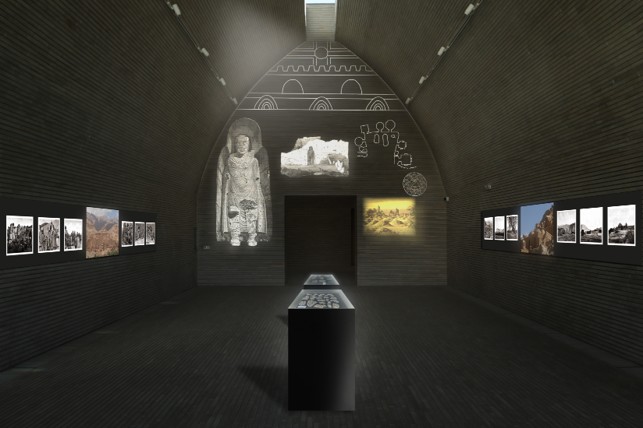
The cultural landscape was the central theme of numerous seminars held at the Bamiyan Cultural Center (BCC) in collaboration with the University of Bamiyan. Additionally, an audiovisual exhibition—developed in partnership with Milan-based Studio Azzurro—was set up at the BCC. Spanning six rooms, the exhibition presents the findings of in-depth research into the structural components of the valley’s cultural landscape, including its physical-geographical environment, natural resources, agricultural practices, arts and crafts, vernacular architecture, traditional settlements, and archaeological heritage. It also explores ongoing transformative processes—such as demographic growth and the expansion of informal settlements—and their impact on territorial organization and the character of these places. The exhibition highlights risks related to erosion and climate change, underscoring the need for sustainable management that fosters employment and a lasting economic recovery, compatible with available resources.
Finally, the project provided support for low-impact tourism development—a necessary response to the significant rise in the number of Afghan visitors to the Bamiyan area—through various training initiatives and the launch of six start-ups within the tourism services sector. The Ministry of Foreign Affairs and International Cooperation thus reaffirms its support for the economic resilience of the Afghan population, especially women.